


Here’s a scene we hear about all the time in our San Diego clinics.
You wake up, swing your legs out of bed, stand up… and that first step feels like you stepped on a nail. Sharp. Stabbing. Right in the heel.
You hobble to the bathroom. By the time you’ve brushed your teeth and had a cup of coffee, it’s eased off. You think, “Okay, not bad.” You go about your day, maybe get a walk in, play nine holes, stand at your workstation, chase the grandkids around.
Then you sit down for dinner. You get back up… and there it is again. That same sharp pain, almost like your foot “forgot” how to walk.
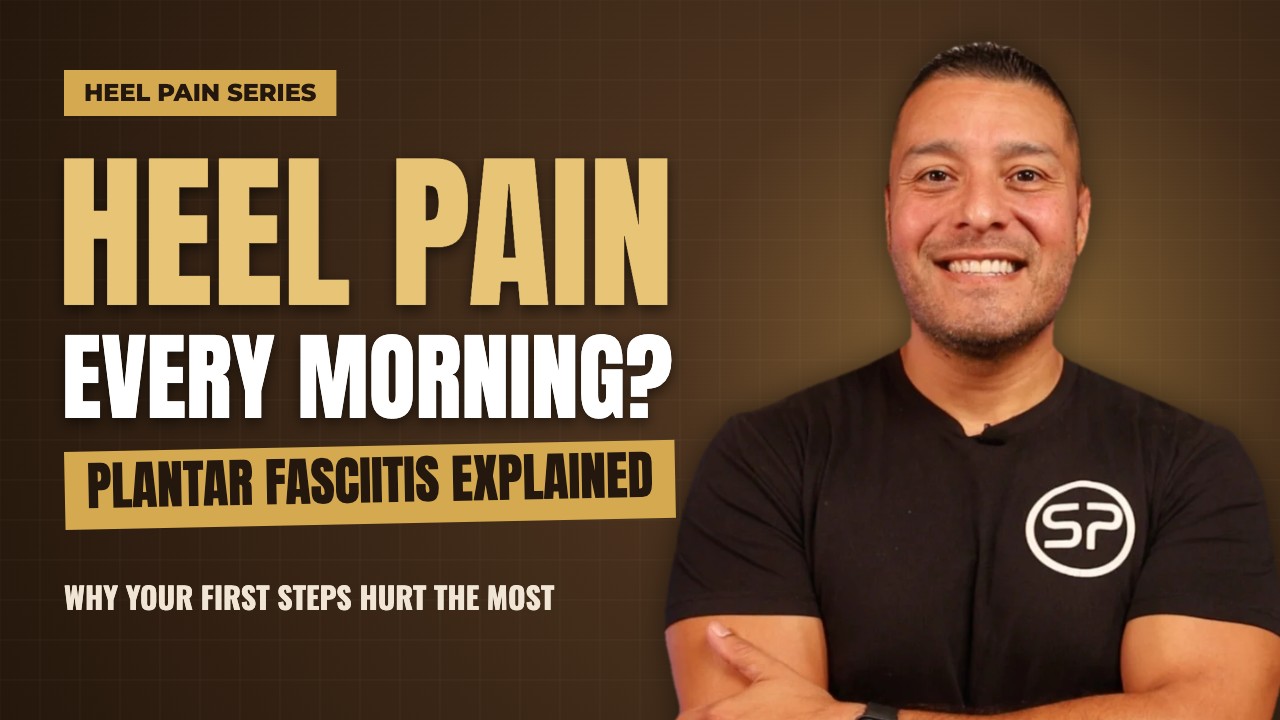
If this sounds familiar, you’re not alone — and you’re not imagining it. This pattern is the classic calling card of plantar fasciitis, one of the most common foot conditions we see in active adults across Chula Vista, Eastlake, and Kearny Mesa.
Let’s break down what’s actually happening in plain English, why it hurts most in the morning, and what tends to cause it in the first place.
What Is the Plantar Fascia, Anyway?
Think of the plantar fascia as a thick, flat band of tissue that runs along the bottom of your foot, connecting your heel bone to your toes. It works like a bowstring, holding up the arch of your foot and absorbing shock every time your foot hits the ground.
When you walk, run, or even just stand, that band is under constant tension. If it gets overloaded — from too much activity, poor support, or tightness elsewhere in the leg — small amounts of irritation and micro-damage build up in the tissue, especially near where it attaches to the heel.
Why Mornings Are the Worst
Here’s the part most people don’t realize: while you sleep, that irritated tissue starts to tighten and heal in a shortened position.
So when you take your first steps in the morning, you’re essentially yanking that tight, sensitive band back open — fast. That’s the “stepping on a nail” feeling.
As you move around, the tissue warms up and stretches out a bit, so the pain eases. But if you’ve been sitting for a while — at your desk, in the car, at dinner — the fascia tightens up again, and that first-step pain comes right back. This is why so many clients tell us, “It’s fine once I get going, but it kills me after I’ve been sitting.”

Common Causes We See in Active Adults
Plantar fasciitis doesn’t usually come from one single event. It’s almost always a buildup of small stresses over time. The most common culprits we see:
- A sudden jump in activity — Started a new walking routine, training for a 5K, added extra holes to your golf game, or picked up more shifts on your feet? A quick increase in time spent standing, walking, or running is one of the biggest triggers.
- Worn-out or unsupportive shoes — Old sneakers with flattened soles, flip-flops, or going barefoot on hard tile and hardwood floors all remove the support your foot needs, forcing the fascia to work overtime.
- Tight calves and weak foot muscles — Tight calf muscles limit how your ankle moves, which puts extra strain on the plantar fascia with every step. Weak intrinsic foot muscles mean your arch isn’t getting the support it needs from the inside out.
- Standing all day on hard surfaces — If your job has you on your feet for hours — behind a counter, in a kitchen, on a work site — the constant, repetitive load adds up fast.
- Changes in weight or activity level — Even modest weight changes shift the load on your feet. Life changes too — more walking, less walking, new exercise routines — can all shift the stress pattern on your fascia.
Who Tends to Get This?
We see plantar fasciitis most often in active adults between 40 and 60 years old. It’s especially common in walkers, runners, golfers, and people whose jobs keep them on their feet most of the day. The tissue naturally loses some elasticity as we age, and most of us have also picked up years of small movement compensations, tight spots, and old shoe habits that catch up with us.
📅 Don’t Wait for It to “Just Go Away”
If plantar fasciitis has been changing how you walk, train, or get through your day, don’t wait for it to work itself out. Book a Free Discovery Visit with our team and let’s build a clear plan together.
Let’s Clear Up a Couple of Myths
“It’s just a heel spur.” Many people with plantar fasciitis do have a small heel spur on an X-ray — but plenty of people have spurs with zero pain. The spur is rarely the real problem. The irritation and tightness in the fascia itself is what’s actually causing your pain.
“I’ll just rest it and it’ll go away.” Rest can quiet things down temporarily, but on its own, it rarely fixes the underlying issue — tightness, weakness, and poor support are still there waiting for you the moment you get back to your normal activity.
When It’s Time to Get It Checked
A few days of mild morning stiffness is common and often resolves on its own. But it’s time to get it looked at if you notice:
- Pain that’s lasted more than a few weeks
- You’re limping or changing how you walk to avoid the pain
- You’ve started avoiding walks, runs, or activities you enjoy
- The pain is getting worse, not better
The sooner it’s addressed, the easier it typically is to resolve.
Want to Learn More, Face to Face?
If you’d rather talk it through in person, join us for our free Plantar Fasciitis Workshop on Tuesday, Dec 15 at 6:15 PM at Sports Performance Chula Vista. We’ll walk you through exactly why plantar fasciitis happens, what you can do about it, and answer your questions live.
👉 Save your spot at the Plantar Fasciitis Workshop
We’ll also touch on options like supportive custom orthotics and, for more stubborn cases, regenerative therapy — tools we use to help clients get back to walking, running, and standing without that morning dread.
Don’t Let Plantar Fasciitis Decide Your Day
You don’t have to accept wincing through your first steps every morning as “just part of getting older.” Plantar fasciitis has clear causes — and clear solutions.
Book your Free Discovery Visit, or join our free Plantar Fasciitis Workshop on Dec 15 at 6:15 PM at Sports Performance Chula Vista.
👉 Book your Free Discovery Visit here
This blog is for educational purposes only and is not a substitute for individualized medical advice. Every client’s situation is different — our team will assess your specific case and recommend the best path forward for you.
As always, we hope this helps! For any questions and all suggestions, please email us at TeamSP@SportsPerformancePT.com
If you want to know more information about how we can help, get started with a FREE discovery phone call.
Click the following link -> DISCOVERY PHONE CALL.
If you’re interested in doing Physical Therapy at Sports Performance -> CLICK HERE TO LEARN MORE & INQUIRE
If you would like to see more from us at Sports Performance… Watch our Podcast episode 141 about How to Improve your Long Term Health and Wellness -> CLICK HERE
– Dr. Chris

STAY CONNECTED
Instagram: CLICK HERE
Facebook: CLICK HERE
YouTube: CLICK HERE
Podcast: CLICK HERE
TUNE IN TO OUR PODCAST






Leave a reply