

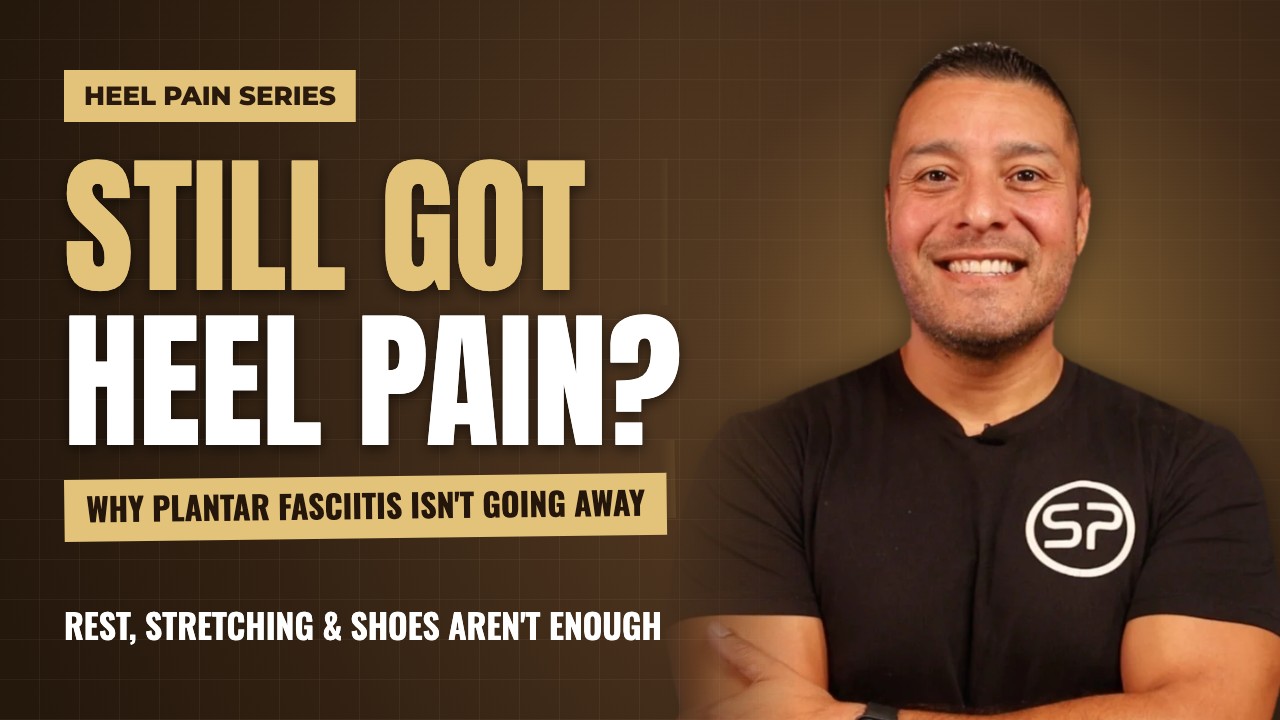

You know the routine by now.
Ice at night. A frozen water bottle rolling under your arch while you watch TV. Expensive new shoes that promised “all-day comfort.” A stretch you found on YouTube that you do religiously every morning before your feet even touch the floor.
And yet — months later — that first step out of bed still feels like you’re stepping on a marble with a knife underneath it.
If that’s you, take a breath. You’re not doing anything wrong, and you’re not alone. We see active adults all over San Diego — walkers, hikers, pickleball players, people who just want to get through a workday on their feet — who’ve done “everything right” and are still stuck. The truth is, the usual advice for plantar fasciitis is incomplete. Here’s why it isn’t working, and what actually helps.
How Long Does Plantar Fasciitis Usually Last?
This is the question everyone asks, and the honest answer is: it depends on what you do about it.
For some people, a few weeks of relative rest and some simple changes is enough. For others — especially active adults over 40 who are busy, on their feet a lot, or not addressing the root cause — it drags on for six months, a year, or longer. Plantar fasciitis doesn’t have a fixed timeline. It has a cause. Find the cause, and recovery speeds up. Ignore it, and you can end up managing symptoms indefinitely.
Why Doesn’t Rest Alone Fix It?
Resting feels logical. Less use, less pain, right?
Here’s the problem: the plantar fascia and the muscles that support your foot don’t just need a break — they need to get stronger and more resilient. When you rest completely, the tissue doesn’t rebuild itself to handle your normal activity. It actually gets weaker and more deconditioned.
So you rest, the pain fades a bit, you feel hopeful, you go back to your normal walking, gym routine, or weekend hike — and the pain comes roaring back. This is the frustrating cycle so many of our clients describe: rest, feel better, return to activity, flare up, repeat. Rest can calm things down temporarily, but it doesn’t fix why the tissue got overloaded in the first place.
Is Stretching Enough?
Stretching your calf and the bottom of your foot isn’t a bad idea — tight calves are genuinely one of the most common contributors to heel pain. But stretching alone is rarely enough.
Think of it this way: stretching addresses flexibility, but plantar fasciitis is usually a loading problem. Your foot and calf need the strength and capacity to handle the walking, standing, and activity you’re asking of them every day. A tight muscle that’s also weak will keep causing problems no matter how much you stretch it.
Do Shoes, Inserts, and Night Splints Help?
Sometimes — but they’re rarely the whole answer.
Supportive shoes can reduce irritation. Over-the-counter inserts can offer some temporary relief for certain foot types. Night splints can help with that brutal first-step pain in the morning by keeping gentle tension on the tissue overnight.
But none of these tools correct why your fascia is overloaded in the first place. For some clients, a properly assessed, custom orthotic genuinely makes a difference — but it should be based on how your foot actually moves and functions, not a guess off a drugstore shelf.
Should I Keep Walking or Exercising?
In most cases, yes — but smarter, not harder.
Complete rest tends to backfire, as we covered above. The better approach is modifying your activity: adjusting distance, pace, surfaces, or footwear temporarily while you build strength, rather than stopping everything cold turkey. Movement is good for tissue healing when it’s dosed correctly.
Is a Cortisone Shot a Good Idea?
Cortisone injections can reduce pain and inflammation short term, and for some people that relief is genuinely welcome. But a shot doesn’t correct calf tightness, foot weakness, walking mechanics, or activity overload — the things actually causing the problem. Many clients tell us the pain returns weeks or months later because the underlying cause was never addressed. It’s worth having that full conversation with your provider before deciding.
What Actually Helps
The clients who get lasting relief are the ones who stop chasing the pain and start addressing the cause. That usually means:
- Finding the real contributing factors — calf tightness, weak foot and ankle muscles, hip strength, walking pattern, footwear, and how much activity your body is currently handling.
- Gradually building strength in the foot, ankle, and calf so the tissue can tolerate daily life without flaring up.
- Smart activity modification — not stopping everything, but adjusting what you do while your foot rebuilds capacity.
- Custom orthotics when appropriate — a proper option when your foot mechanics need extra support.
- Options like shockwave therapy for more stubborn, long-standing cases that haven’t responded to the basics.

Three Simple Things You Can Try This Week
- Calf raises, slow and controlled — 2–3 sets of 10–15, holding onto a counter for balance, done daily.
- Towel scrunches — sit in a chair, place a towel under your foot, and scrunch it toward you using just your toes. This builds small foot muscles that support the arch.
- Adjust, don’t eliminate, your activity — if walking 3 miles flares you up, try 1.5 miles for a week while you build strength, rather than quitting entirely.
These won’t solve everything on their own, but they’re a safe starting point while you figure out the bigger picture.
Join Us: Free Plantar Fasciitis Workshop
If you’re ready for real answers instead of more guesswork, join our free Plantar Fasciitis Workshop on Tuesday, Dec 15 at 6:15 PM at Sports Performance Chula Vista. We’ll walk through exactly why heel pain lingers and what actually gets it resolved for good. Reserve your spot here.
You Don’t Have to Keep Living With This
Months of heel pain is exhausting — physically and mentally. But it’s not permanent, and it’s not something you just have to manage forever with ice packs and expensive shoes.
Book your Free Discovery Visit, or join our free Plantar Fasciitis Workshop on Tuesday, Dec 15 at 6:15 PM at Sports Performance Chula Vista. Click here to get started.
This blog is for educational purposes and isn’t a substitute for individualized medical advice. Every case of heel pain is different — a proper assessment is the best way to determine what’s right for you.
If you want to know more information about how we can help, get started with a FREE discovery phone call.
Click the following link -> DISCOVERY PHONE CALL.
If you’re interested in doing Physical Therapy at Sports Performance -> CLICK HERE TO LEARN MORE & INQUIRE
If you would like to see more from us at Sports Performance… Watch our Podcast episode 141 about How to Improve your Long Term Health and Wellness -> CLICK HERE
– Dr. Chris

STAY CONNECTED
Instagram: CLICK HERE
Facebook: CLICK HERE
YouTube: CLICK HERE
Podcast: CLICK HERE
TUNE IN TO OUR PODCAST




Leave a reply